
Description
Bring STEM to life in your classroom or home!
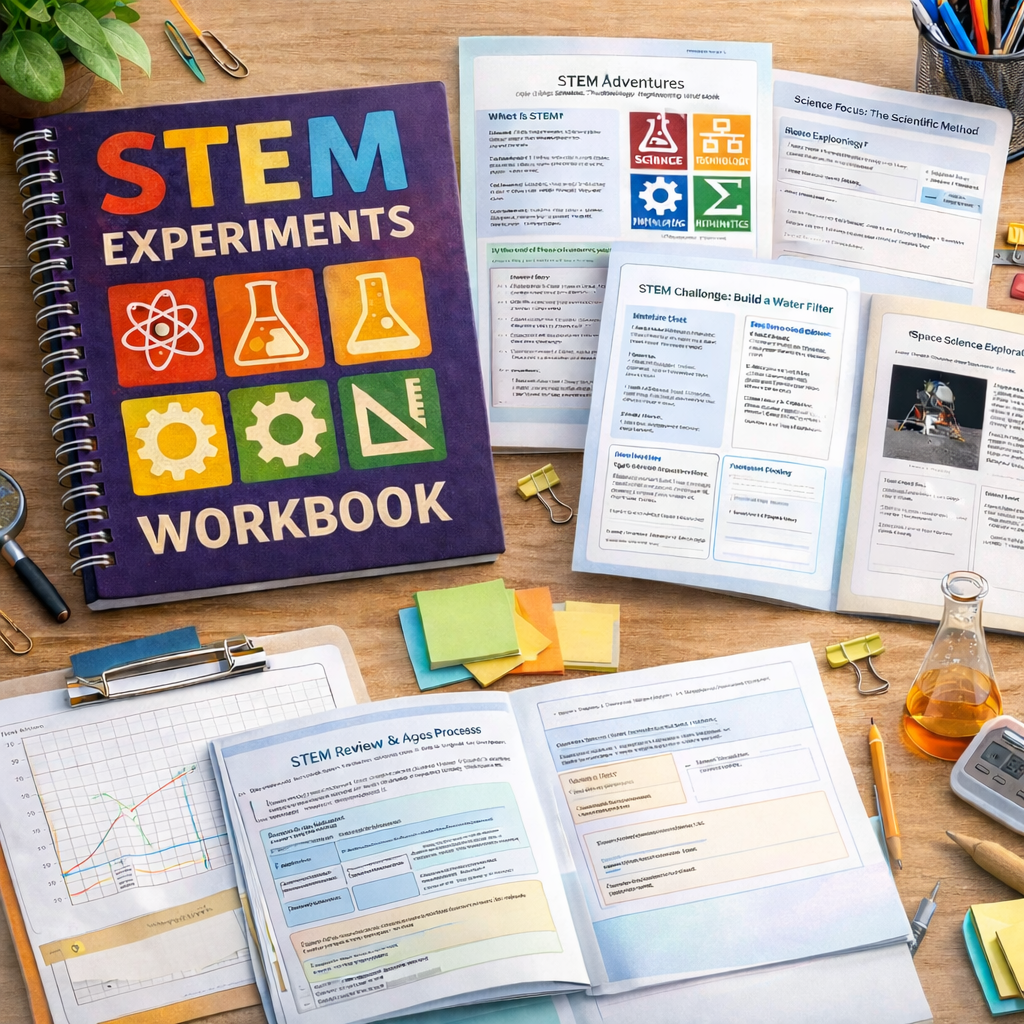
The STEM Experience Workbook is a powerful, hands-on resource designed to help students explore science, technology, engineering, and mathematics through interactive experiments and real-world challenges.
From investigating the scientific method to designing solutions using the engineering design process, students actively learn by doing—not just watching.
This workbook is carefully designed to support inquiry-based learning, helping students ask questions, test ideas, and reflect on their discoveries—just like real scientists and engineers.
Perfect for busy educators, this ready-to-use resource saves time while delivering meaningful, standards-aligned learning.
Students will:
- Explore STEM concepts through real experiments
- Develop problem-solving and critical thinking skills
- Apply math in real-world contexts
- Build confidence through hands-on learning
- Understand how STEM connects to real careers
What’s Included
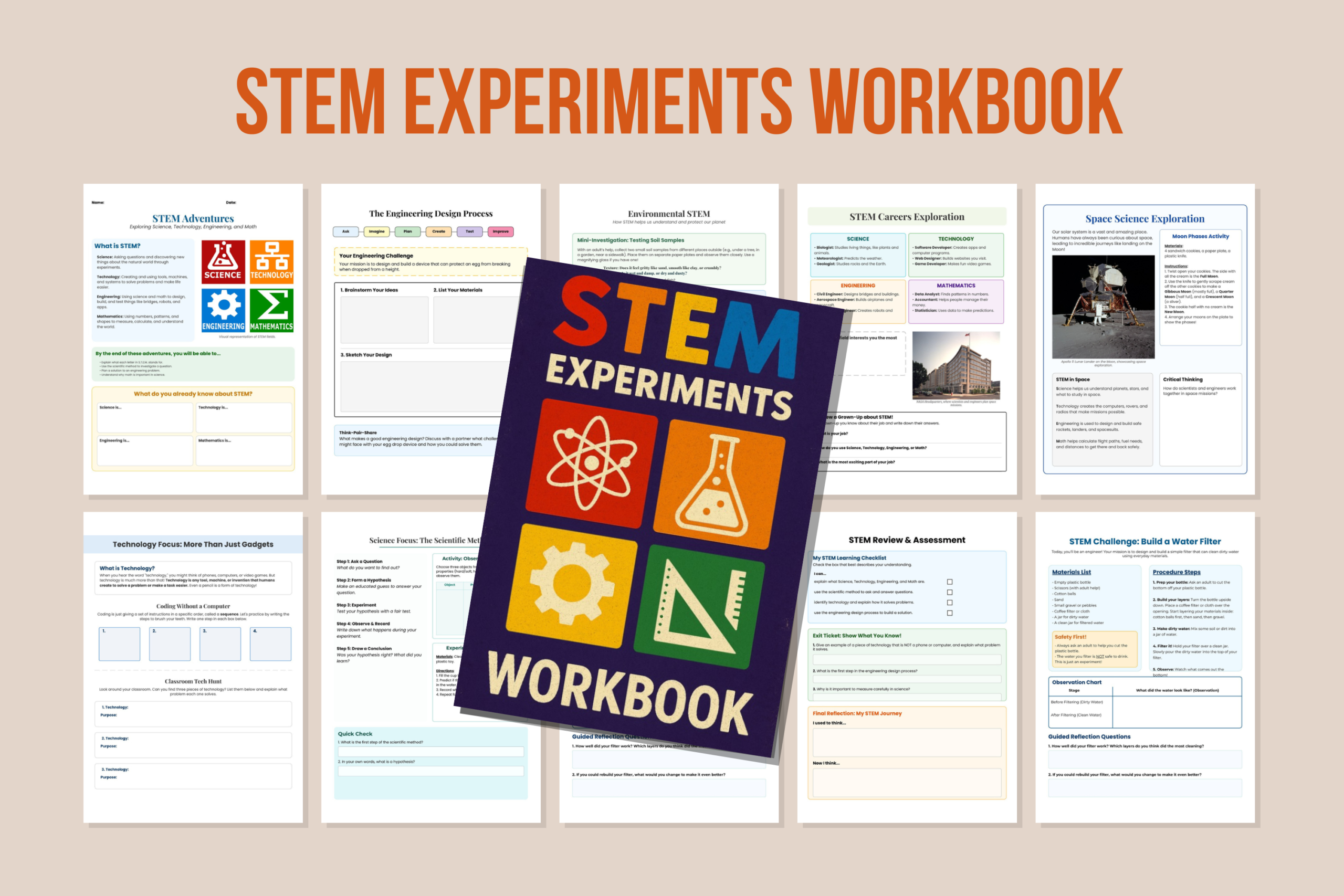
- STEM introduction & concept-building pages
- Scientific Method activities & guided experiments
- Engineering Design Process templates
- Hands-on STEM challenges (e.g., water filtration, design tasks)
- Data collection & observation sheets
- Math integration tasks (graphs, measurements, analysis)
- STEM career exploration pages
- Reflection & assessment sections
- Printable, student-friendly worksheets
Perfect For
- Primary teachers (Grades 2–5)
- STEM & science lessons
- Project-Based Learning (PBL)
- Inquiry-based classrooms
- Homeschooling families
- STEM clubs & enrichment programs
- Parents who want meaningful, screen-free learning
NGSS Alignment
- 3-5-ETS1-1: Define design problems based on criteria and constraints
- 3-5-ETS1-2: Generate and compare multiple solutions
- 3-5-ETS1-3: Plan and carry out fair tests to improve designs
- 5-PS1-3: Make observations and measurements to identify materials
- Science & Engineering Practices:
- Asking questions
- Developing models
- Analyzing data
- Constructing explanations
Math CCSS Alignment
- 2.MD / 3.MD / 4.MD: Measurement & data collection
- 3.OA / 4.OA: Problem-solving & operations
- 3.G / 4.G: Geometry & spatial reasoning