
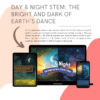

Description
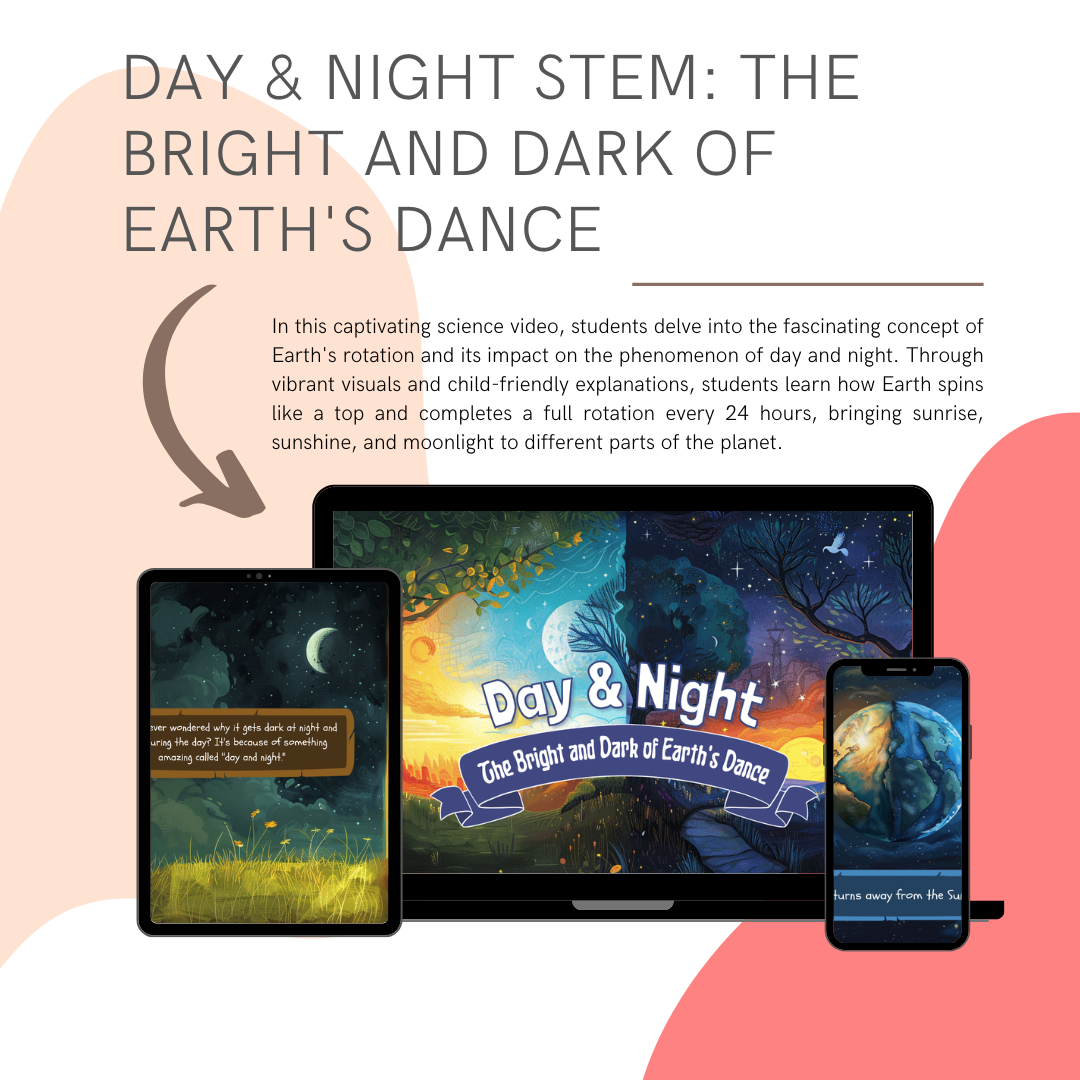
Bring science to life in your classroom with this engaging Day & Night STEM Educational Video, designed to help students clearly understand one of Earth’s most important concepts—why we have day and night.
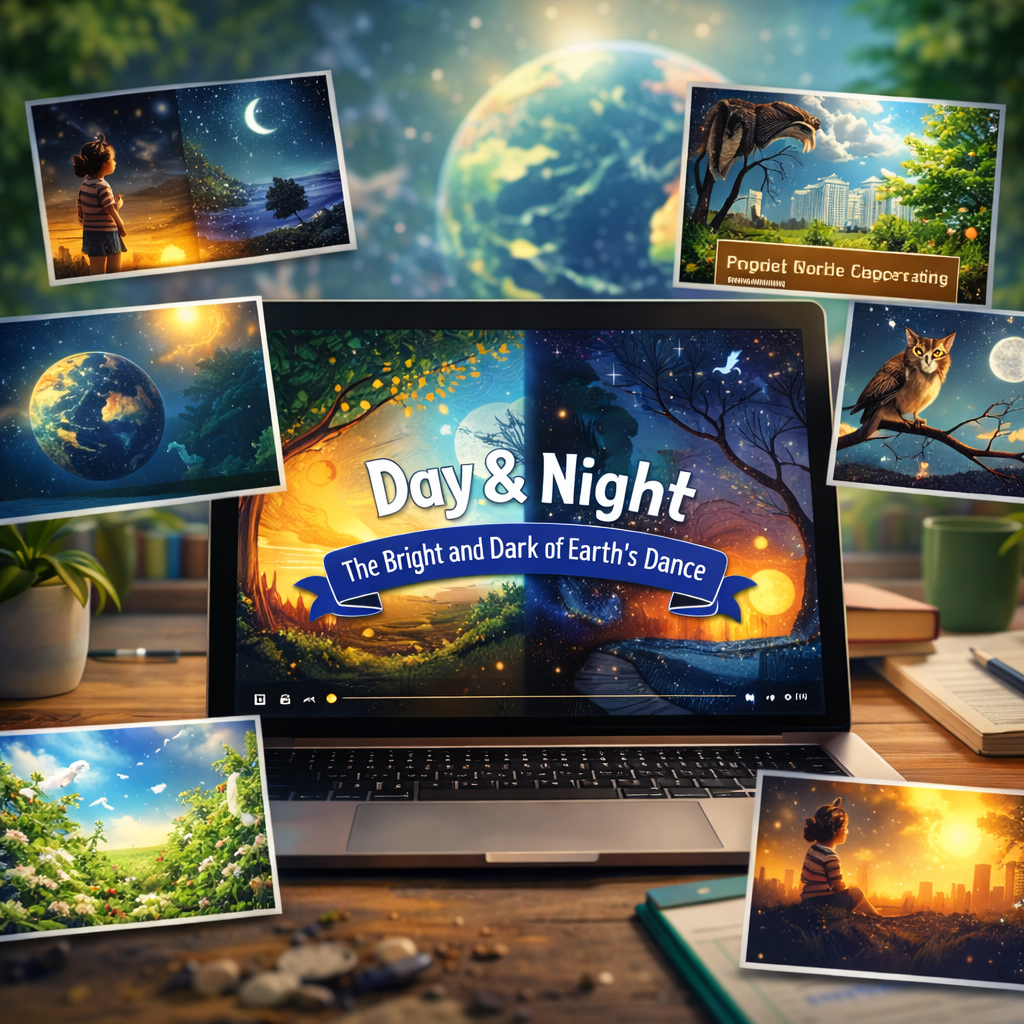
Through colorful animations, relatable storytelling, and real-world examples, students explore how the Earth rotates and how the Sun creates patterns of light and darkness across our planet. This video simplifies complex scientific ideas into easy-to-understand visuals, making it ideal for elementary learners.
Perfect for busy teachers and parents, this ready-to-use MP4 video requires zero preparation and can be used during whole-class instruction, centers, homework support, or distance learning.
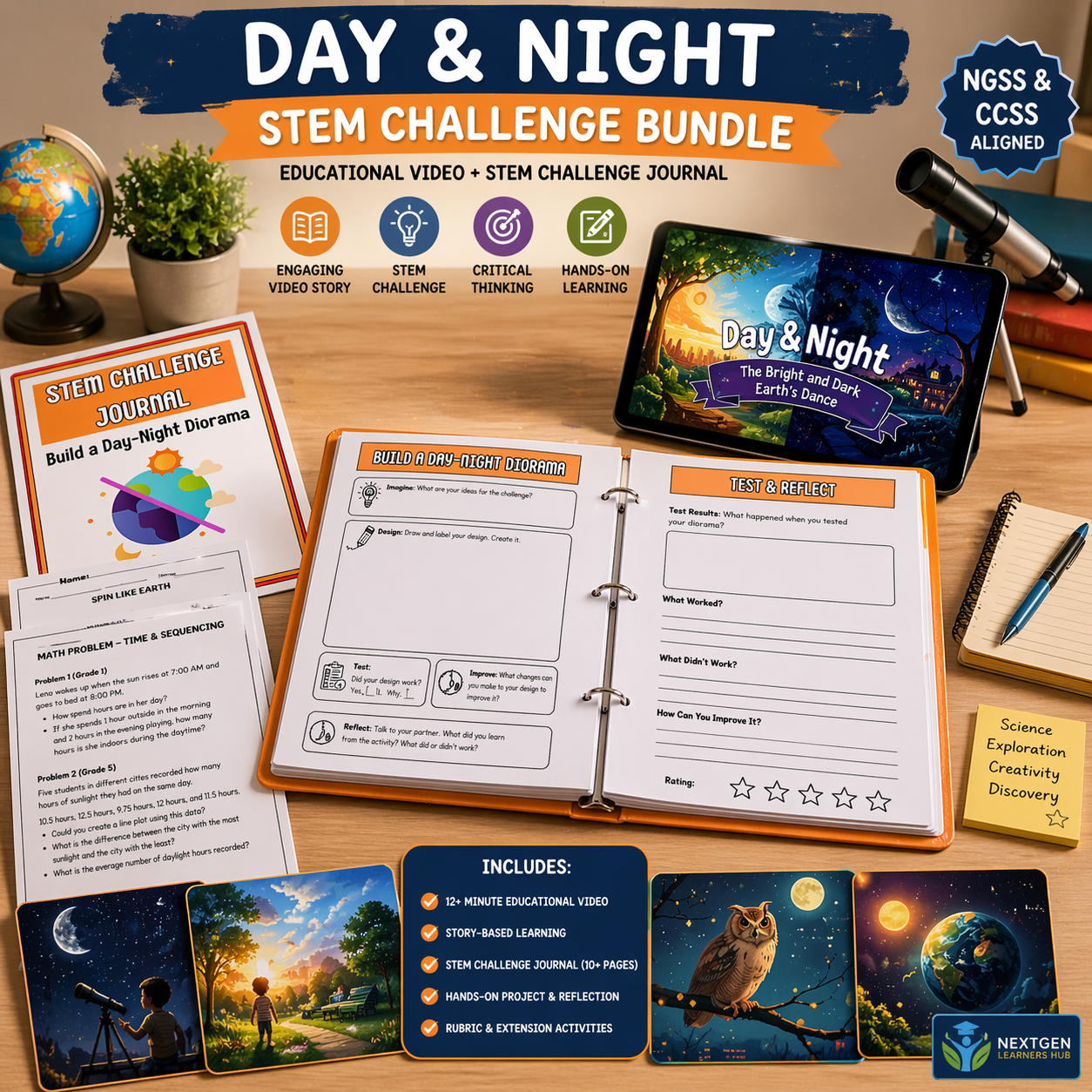
Educational Video (Day & Night Concept)
- 12+ beautifully illustrated scenes
- Explains:
- Earth’s rotation
- Why day and night occur
- Sunlight and shadow patterns
- Story-based, kid-friendly explanations
STEM Challenge Journal (Printable PDF)
Includes structured pages:
- Cover Page (Build a Day-Night Diorama)
- Challenge & Objective Page
- Science + SDG Alignment Page
- Imagine & Plan (Design Thinking Page)
- Materials & Method Sections
- Test & Improve Page
- Reflection Section
- Self-Assessment (Rating System)
- Math Problem Page (Time & sequencing)
What Students Will Learn
- Why day and night happen
- How Earth rotates on its axis
- The role of the Sun in providing light and warmth
- The 24-hour cycle of Earth’s rotation
- Differences between daytime and nighttime environments
- How animals adapt to day and night
Perfect For:
- Grades: 1–4
- Science lessons (Earth & Space Science)
- STEM centers
- Homeschool learning
- Distance learning & digital classrooms
- Substitute teacher plans
Why Teachers Love This:
- No-prep, ready-to-use lesson
- Saves time and reduces planning stress
- Highly engaging visuals for young learners
- Supports visual and auditory learners
- Easy to integrate into any lesson plan
NGSS ALIGNMENT
1-ESS1-1: Use observations of the Sun, Moon, and stars to describe patterns that can be predicted.
1-ESS1-2: Make observations at different times of day to describe patterns in the natural world.
5-ESS1-2: Represent data in graphical displays to reveal patterns of daily changes in length and direction of shadows, day and night, and seasonal appearance of stars.