
Description
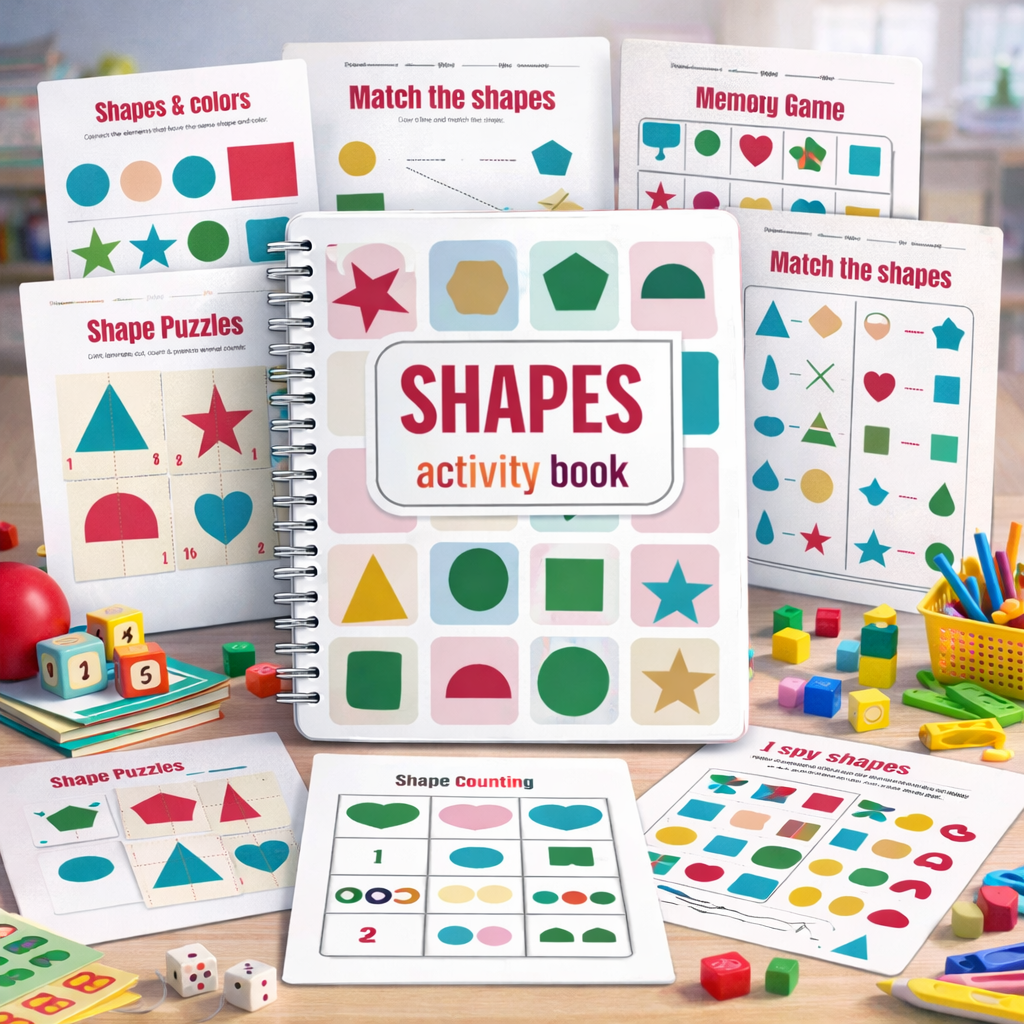
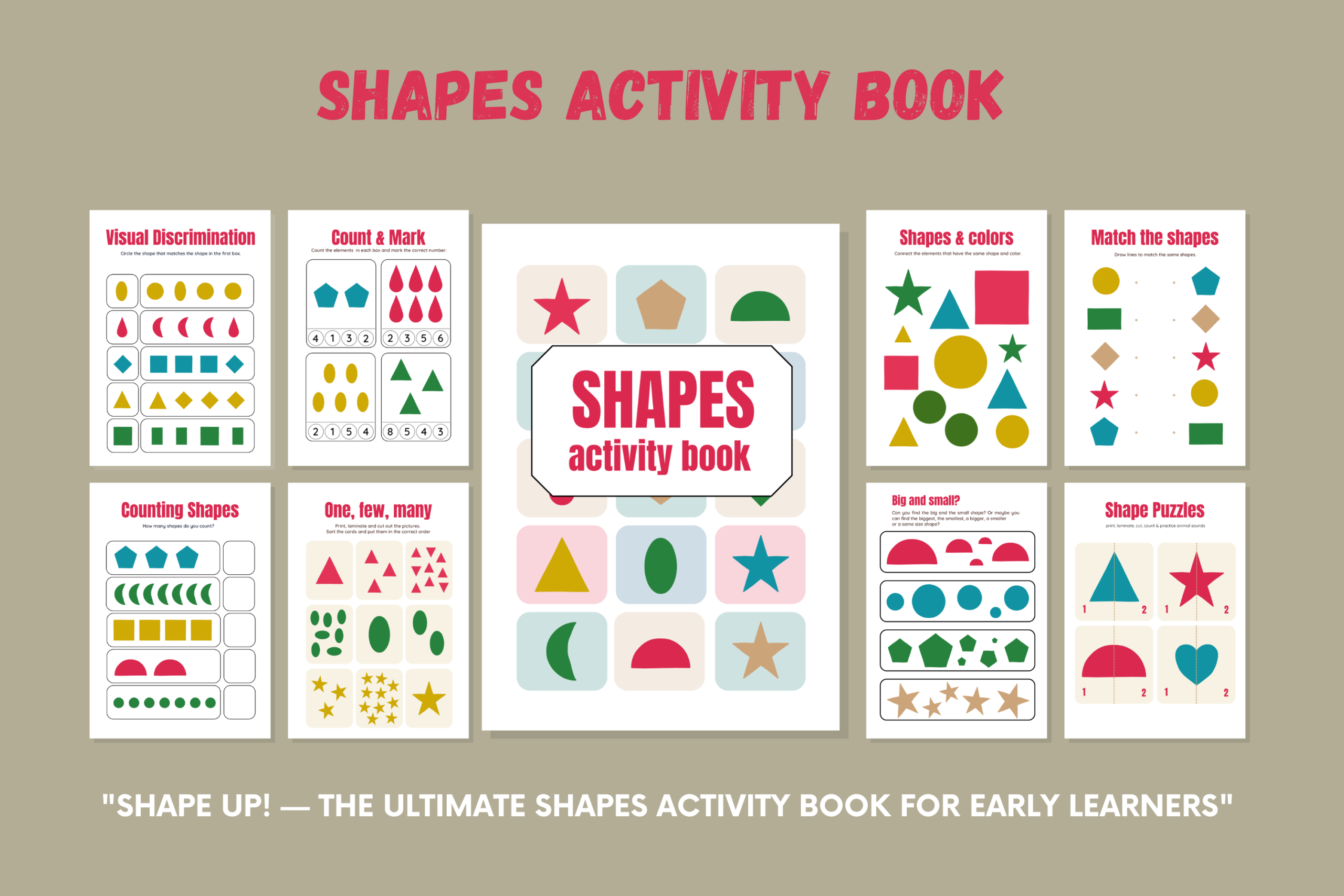
Say goodbye to boring shape worksheets! The “Shape Up!” Activity Book is an 18-page, print-and-use workbook that makes learning 2D shapes genuinely exciting for young learners. Through play-based, multi-skill activities, children build shape recognition, visual thinking, counting, pattern prediction, symmetry, fine motor skills, and early math reasoning — all in one beautifully designed book!
Whether you’re a Kindergarten teacher building geometry centers, a parent doing at-home learning, or an early childhood educator supporting Pre-K students — this workbook is your go-to resource that kids will ask to do again and again!
Included
✔ Shape identification and visual discrimination activities
✔ Counting and matching shapes to numbers
✔ Big vs. small, more vs. less comparisons
✔ One–few–many sorting cards
✔ First, second, last position activities
✔ Shape patterns and sequencing
✔ Cut-and-paste shape puzzles
✔ Memory game and domino matching
✔ Roll-and-color shape game
✔ Mirror image drawing and shape completion
CCSS Math Alignment
K.G.A.1Describe objects in the environment using names of shapes
K.G.A.2Correctly name shapes regardless of orientation or size
K.G.A.3Identify shapes as two-dimensional (flat)
K.G.B.4Analyze and compare two-dimensional shapes by attributes (sides, vertices)
K.G.B.6Compose simple shapes to form larger shapes
K.CC.B.4Understand the relationship between numbers and quantities (counting shapes)
K.CC.B.5Count to answer “how many?” questions
K.OA.A.1Represent quantity with objects and drawings
MP.2Reason abstractly and quantitatively (big/small, more/less, first/last)
MP.6Attend to precision in shape identification and pattern completion
Who Is This Perfect For?
- KG1 & KG2 classroom teachers needing print-and-go math centers
- Pre-K teachers introducing foundational geometry concepts
- Homeschooling parents in the UAE and internationally
- Special Education teachers using visual-based, hands-on resources
- Parents supporting early math skills at home
- Early intervention tutors building visual discrimination and cognitive skills